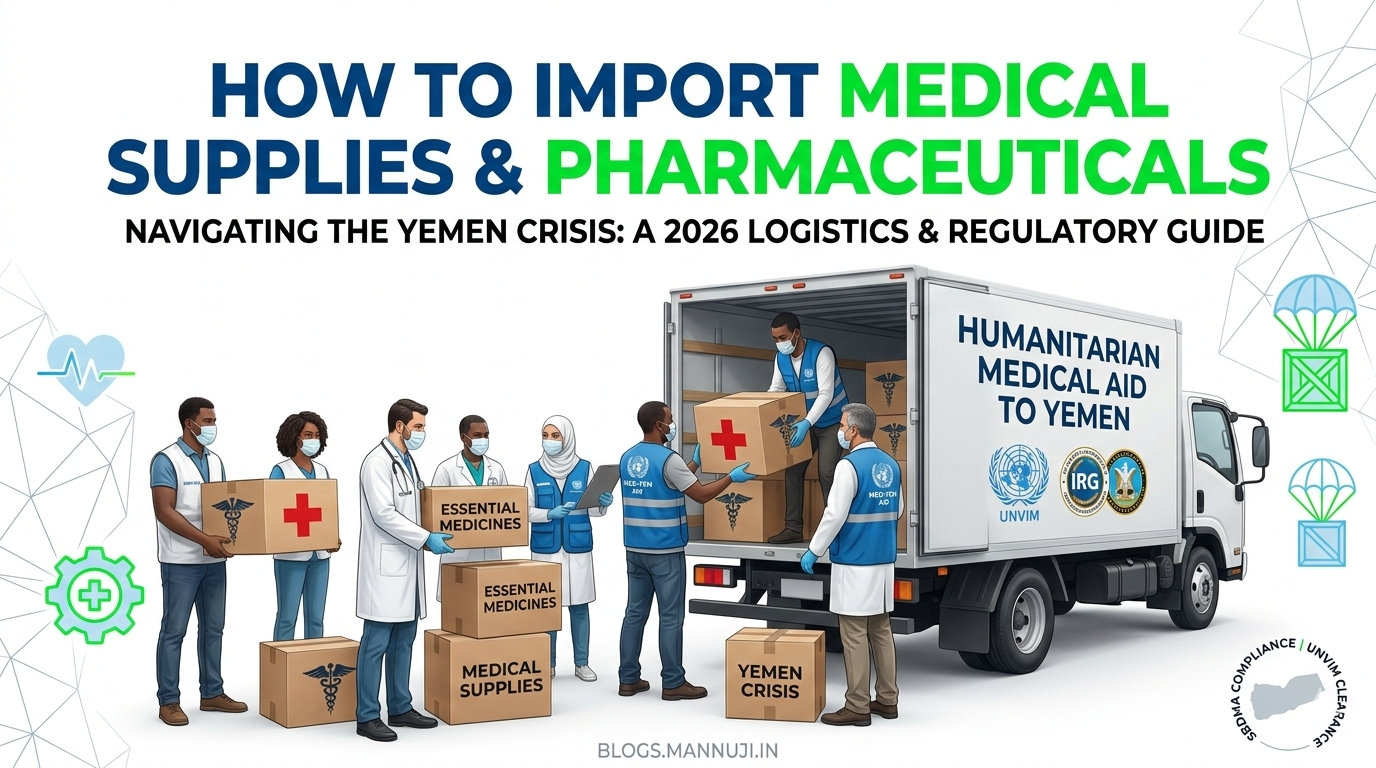
The ongoing crisis in Yemen has created one of the world's gravest and most prolonged humanitarian catastrophes. Years of conflict have severely damaged the nation’s infrastructure, economy, and critical services, with the healthcare system bearing a particularly heavy burden. Hospitals and clinics struggle to function due to damage, lack of equipment, electricity shortages, and a critical scarcity of trained medical professionals. The result is a dire need for essential medical supplies and pharmaceuticals, impacting millions of Yemenis who face limited access to basic healthcare, life-saving medicines, and preventative care.
Importing these vital goods into a complex and unstable environment like Yemen is a monumental task, fraught with logistical bottlenecks, regulatory hurdles, security risks, and significant bureaucratic complexity. This 1650-word guide, updated for 2026 search trends and regulatory environments, provides a comprehensive roadmap for humanitarian organizations, international NGOs, international development agencies, and dedicated private sector entities committed to navigating these challenges and delivering life-saving aid. This guide prioritizes regulatory compliance, safety, and efficient delivery to ensure aid reaches those who need it most.
1. Understanding the Yemeni Healthcare Landscape (2026)
To effectively navigate the process, one must understand the operating environment. By 2026, the situation in Yemen remains fragmented, with different regions under the control of various authorities. This division profoundly impacts every aspect of aid delivery, from regulatory approvals to physical transportation.
Fragmented Authority: The country is divided. The internationally recognized government (IRG) controls southern and some eastern parts, while other authorities govern the northern areas, including the capital, Sana'a. Each de facto authority maintains its own bureaucratic structures and requirements.
Critical Shortages: The need is universal and acute. The top priorities continue to be:
Essential Medicines: Antibiotics, chronic disease medications (insulin, hypertension), maternal and child health drugs.
Trauma Care Supplies: Surgical equipment, bandages, antiseptics, anesthesia.
Vaccines and Cold Chain Products: Vital for preventative care but exceptionally challenging due to power instability.
Diagnostic Equipment: Basic lab supplies, X-ray films, rapid test kits.
Consumables: Syringes, gloves, IV fluids.
Infrastructure Limitations: Ports, airports, and roads are often damaged or operating at reduced capacity. Electricity and fuel shortages are persistent, crippling storage facilities and transportation networks.
[Image showing a map of Yemen, color-coded to indicate areas under the control of different de facto authorities as of 2026.]
2. Essential Prerequisites for Importers
Importing into Yemen is not an ad-hoc activity. It requires established presence, formal registration, and extensive coordination.
A. Establishing Legal Presence and Registration
You must be a legally recognized entity capable of operating in Yemen. This usually involves:
MOPIC Registration: Registering with the Ministry of Planning and International Cooperation (MOPIC) in the relevant jurisdiction (Aden for IRG-controlled areas, Sana'a for other areas). This is crucial for NGOs.
SBDMA/Supreme Board Registration: The Supreme Board of Drugs and Medical Appliances (SBDMA) is the primary regulatory authority for pharmaceuticals and medical equipment. Importers must be registered and licensed by the SBDMA in the specific area they intend to operate or supply.
Local Partners: Often, the most efficient route is to partner with an established, registered local Yemeni NGO or logistics firm that already has the necessary permits, local knowledge, and existing relationships with authorities. They navigate the day-to-day bureaucracy.
B. Understanding the De Facto Realities
You must be prepared to interact with multiple sets of authorities. A permit obtained in Aden might not be recognized in Sana'a, and vice versa. Coordination with both the IRG in Aden and the authorities in Sana'a is often required for cross-line operations or nation-wide distribution.
3. Regulatory Compliance: The SBDMA Framework (2026)
The Supreme Board of Drugs and Medical Appliances (SBDMA) is the apex body. While its functioning is impacted by the crisis, its core regulations still apply, though processes might be manual and require extensive follow-up.
A. Product Registration vs. Batch Approval
Product Registration: Ideally, the pharmaceutical product you are importing should already be registered with the SBDMA. This process involves submitting a common technical document (CTD) and can take months. In a crisis, this is rarely feasible for new products.
Batch Approval (The Emergency Route): This is the more common route for humanitarian aid. Organizations apply for a specific exemption or expedited approval for a defined batch of medicines. This requires submitting:
Certificate of Pharmaceutical Product (CPP): From the country of origin, following WHO guidelines.
Batch Analysis Report/Certificate of Analysis (CoA): For the specific lot being shipped.
Detailed Packing List and Commercial Invoice.
Proof of WHO-GMP (Good Manufacturing Practices): For the manufacturer.
Technical Data Sheets: For medical equipment.
B. SFDA and International Standards
While Yemen has its own standards, SBDMA officials frequently use benchmarks set by stronger regional regulators like the Saudi Food and Drug Authority (SFDA) or international bodies like the WHO (World Health Organization) and EMA (European Medicines Agency). Ensuring your products meet these standards provides a strong argument for expedited clearance. All
4. Sourcing and Procurement: Ensuring Quality Amidst Chaos
Procuring medical supplies for Yemen requires balancing speed and extreme quality control. The crisis has created opportunities for counterfeit or substandard medicines to enter the market.
A. Vetting Manufacturers
Only procure from manufacturers with verified:
WHO-GMP (Good Manufacturing Practices): A non-negotiable standard.
ISO 13485: For medical devices.
Clean Track Record: Verified through WHO alerts and regional regulator databases (like the SFDA).
Crisis-Ready Logistics: Manufacturers experienced in complex shipments (e.g., from India, a major supplier to Yemen). When handling
Bulk Orders
B. Product Selection Criteria
Essential Medicines List: Prioritize drugs on the Yemen National Essential Medicines List (NEML) or the WHO Model List. These are more likely to get expedited approval.
Simplified Formulations: Prioritize easy-to-use and store formulations (e.g., tablets over liquid if possible).
Shelf-Life: Ensure products have a generous remaining shelf-life upon arrival (at least 75-80%).
Durability: Medical equipment must be robust and, ideally, require low maintenance and operating power.