
🌍 Worldwide Export Available β€’ πŸ’° Competitive USD Pricing β€’ πŸ“¦ Minimum Order per Product: 10,000 Jars β€’ ⚑ Quick Production Lead Time
Mannuji Blogs - PET Jars, Biscuits & Cookies Export Insights

Mannuji Blogs

Export Insights & Updates
25+ Countries
1M+ Jars
Worldwide Export

Hidden Gems: 10 European Villages That Aren’t Overcrowded Yet

πŸ“…
πŸ‘οΈ 31 views
🌍 Italy

Europe is famous for its iconic landmarks—the Eiffel Tower, the Colosseum, and the canals of Venice. But as global travel surges, these hotspots often feel more like crowded theme parks than authentic cultural experiences. For the modern traveler, the true magic lies in the "Hidden Gems"—those quiet, cobblestoned corners of the continent where time seems to stand still and the local way of life remains untouched by mass tourism.

Finding these villages requires stepping off the beaten path. It means trading the high-speed rail for a winding coastal road or a mountain pass. In this guide, we explore 10 European villages that offer breathtaking beauty without the crushing crowds.


1. Civita di Bagnoregio, Italy

Known as "The Dying City," this village sits atop a crumbling plateau of volcanic tuff. Accessible only by a steep pedestrian bridge, it offers some of the most dramatic views in Lazio. While it has gained some fame, its remote nature keeps the massive tour buses at bay.

  • Why Visit: For the surreal feeling of walking through a medieval cloud kingdom.

2. Viscri, Romania

Tucked away in the heart of Transylvania, Viscri is a UNESCO World Heritage site that feels like a living museum. With its fortified church and pastel-colored houses, it represents the soul of old-world Europe.

  • Why Visit: To experience the slow pace of agricultural life that has disappeared elsewhere.

3. Monsaraz, Portugal

Perched high above the Alentejo plains near the Spanish border, Monsaraz is a fortified village built of shale and lime. Its narrow streets lead to a castle that overlooks the Alqueva reservoir, one of the largest artificial lakes in Europe.

  • Why Visit: The stargazing here is world-class, as it is part of the first "Starlight Tourism Destination" in the world.

4. Quedlinburg, Germany

While the Rhine Valley gets all the attention, Quedlinburg in the Harz Mountains is a timber-framed masterpiece. With over 1,300 half-timbered houses, it is one of the best-preserved medieval towns in Europe.

  • Why Visit: It offers a fairytale aesthetic without the Disney-fication found in Rothenburg.

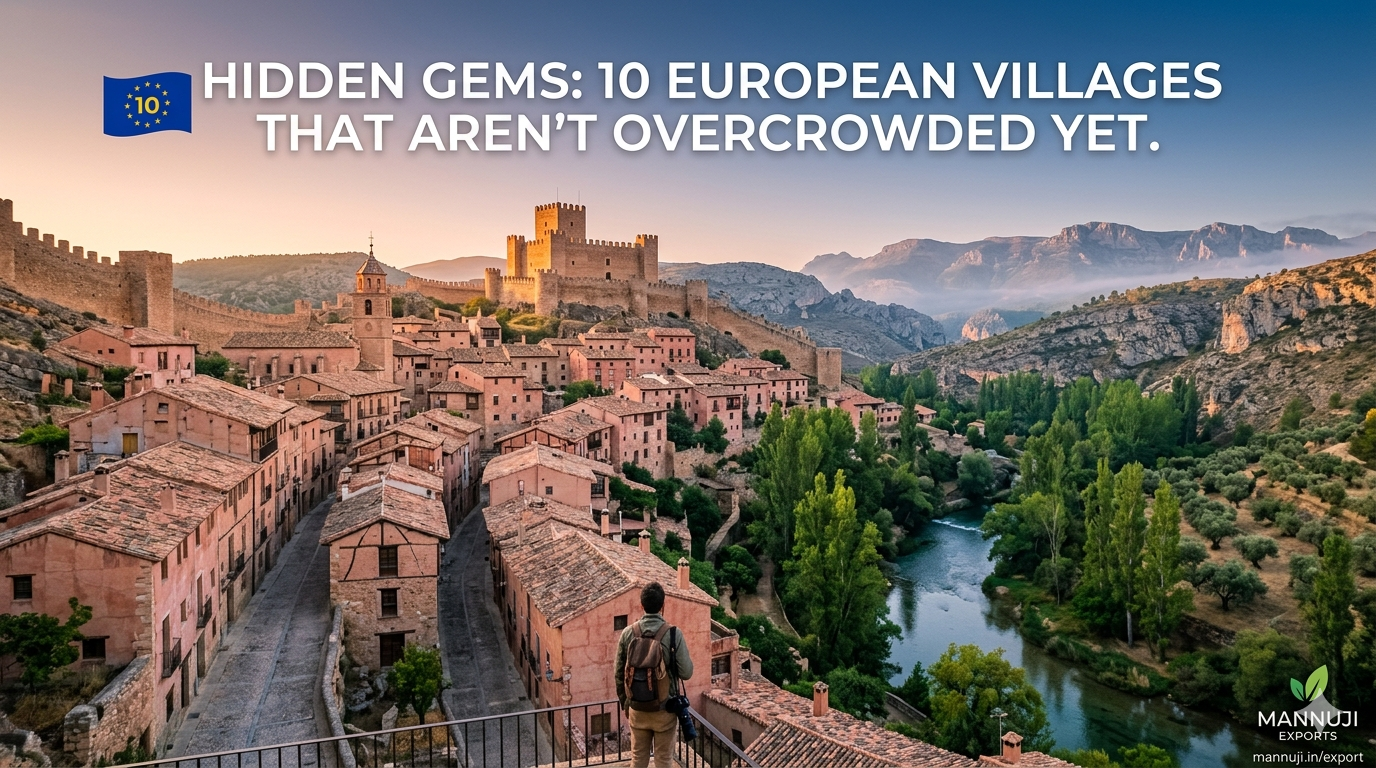
5. Albarracín, Spain

Voted the most beautiful village in Spain multiple times, Albarracín remains surprisingly quiet due to its isolated location in the Teruel mountains. The pinkish hue of its stone houses at sunset is a photographer’s dream.

  • Why Visit: The Moorish history and rugged canyon landscape.

6. Gilleleje, Denmark

A charming fishing village on the northern tip of Zealand, Gilleleje offers a serene coastal escape. It’s a place of thatched roofs, fresh seafood markets, and quiet beaches.

  • Why Visit: For the authentic "Hygge" experience by the sea.

7. Piodão, Portugal

Deep in the Serra do Açor, Piodão is famous for its schist houses with blue-painted doors. It was once so isolated that it developed a unique architectural style entirely out of local stone.

  • Why Visit: It feels like a secret mountain hideaway.

8. Staufen im Breisgau, Germany

Located on the edge of the Black Forest, this village is steeped in legend (it’s where the historical Dr. Faust supposedly met his end). It is surrounded by vineyards and features a ruinous castle overlooking the town.

  • Why Visit: Exceptional wines and legendary folklore.

9. Stechelberg, Switzerland

While tourists flock to Lauterbrunnen, those in the know continue to the very end of the valley to Stechelberg. This car-free village is the gateway to high-alpine hiking without the lift lines.

  • Why Visit: To hear the roar of dozens of waterfalls in total peace.

10. Kardamyli, Greece

Located in the Mani Peninsula, Kardamyli is a sophisticated but quiet seaside village. With its stone towers and olive groves, it provides a rugged, poetic alternative to the crowded Cycladic islands.

  • Why Visit: The perfect blend of mountain hiking and crystal-clear pebble beaches.


The Logistics of Quiet Travel

Traveling to these hidden gems requires a different mindset. Unlike major cities, these villages often have limited plastic-free shopping options, so being prepared is key. Travelers should carry their own eco-friendly multi-surface cleaners or biodegradable dish soaps to ensure they leave no trace in these pristine environments.

Sourcing Sustainable Travel Gear

For those planning long-term stays in these remote locations, sourcing bulk supplies can be a challenge. Many travelers and boutique guesthouse owners in these regions rely on international export partners to provide high-quality, sustainable products. Whether it's industrial floor cleaners for a centuries-old villa or specialized glass cleaners to maintain panoramic views, having the right supplies is essential.

Traveling with Pets

Exploring Europe’s villages is even better with a furry companion. However, finding specific canine nutrition in a tiny village in Portugal or Romania can be difficult. It is often wiser to stock up on export-quality dog biscuits before heading into the mountains. Brands often provide adult-specific formulas or puppy treats that are easy to pack and store in featured PET jars.


Why Remote Villages are the Future of Travel

The shift toward "Slow Travel" is more than just a trend; it's a necessity. By visiting lesser-known villages, we:

  1. Reduce Overtourism: We take the pressure off cities like Amsterdam and Barcelona.

  2. Support Local Economies: Your money goes directly to small-scale artisans and family-run taverns.

  3. Find Genuine Connection: It’s easier to strike up a conversation with a local in a village of 500 people than in a city of 5 million.

For businesses looking to support the infrastructure of these rising destinations, understanding export documentation and export terms is the first step in providing the goods these remote areas need to thrive.


Conclusion

Europe’s soul isn't found in its gift shops or its crowded plazas. It is found in the quiet clinking of coffee cups in a Portuguese village, the smell of damp stone in a German Harz town, and the view of the Mediterranean from a Greek tower. By choosing the hidden gems, you aren't just taking a vacation; you're preserving a way of life.

If you are a boutique hotelier or a traveler planning a long-term stay in one of these gems, feel free to reach out to our export team for advice on sourcing the right cleaning products and pet care supplies for your journey.

Share this article